 Jam Jam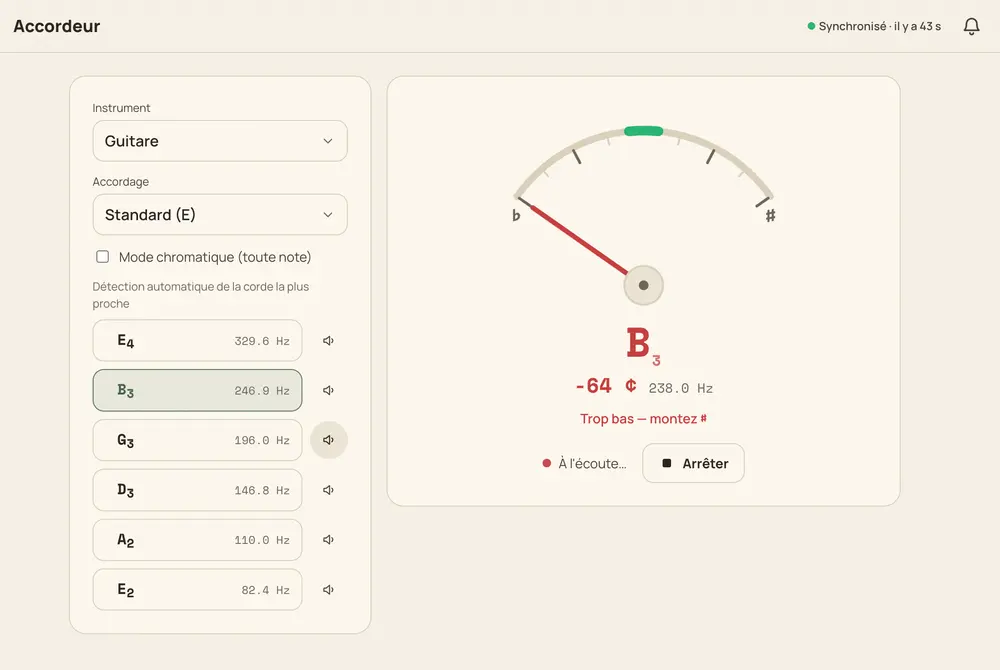
Arabic or Turkish: choose your tuning first
The modern Arabic standard is C2, F2, A2, D3, G3, C4 from the lowest course to the highest. The Turkish tuning is D2, G2, B2, E3, A3, D4, a tone higher with a different interval pattern. Your teacher, your strings and your repertoire decide; both are presets in the Jam Jam tuner, so pick one and the six targets follow.
Tune one string per course, then match its twin by ear
A tuner reads one pitch at a time. Pluck a single string of the course, bring the needle into the green band (that is ±5 cents), then pluck the twin and turn its peg until the beating between the two disappears. Work from the lowest course upwards, then go back to the first: the tension of the last courses shifts the first ones slightly.
Check fingered notes too
Without frets, the open strings being right does not make your intonation right. Play a fingered note, hold it, and watch the needle: it names the note and the offset in cents. It is a quick way to check your hand before a lesson or a recording.

Tune it now with the free online tuner: