 Jam Jam
What the BPM of a song means
BPM (beats per minute) measures the speed of the pulse, the one you tap your foot to. At 60 BPM a beat lasts one second; at 120 BPM, half a second. Tempo says nothing about the time signature (4/4, 3/4, 6/8): it only counts beats. Knowing the BPM lets you set a metronome, practise a piece slowly then at full speed, or mix two tracks.
Tap tempo: tap along to find the BPM
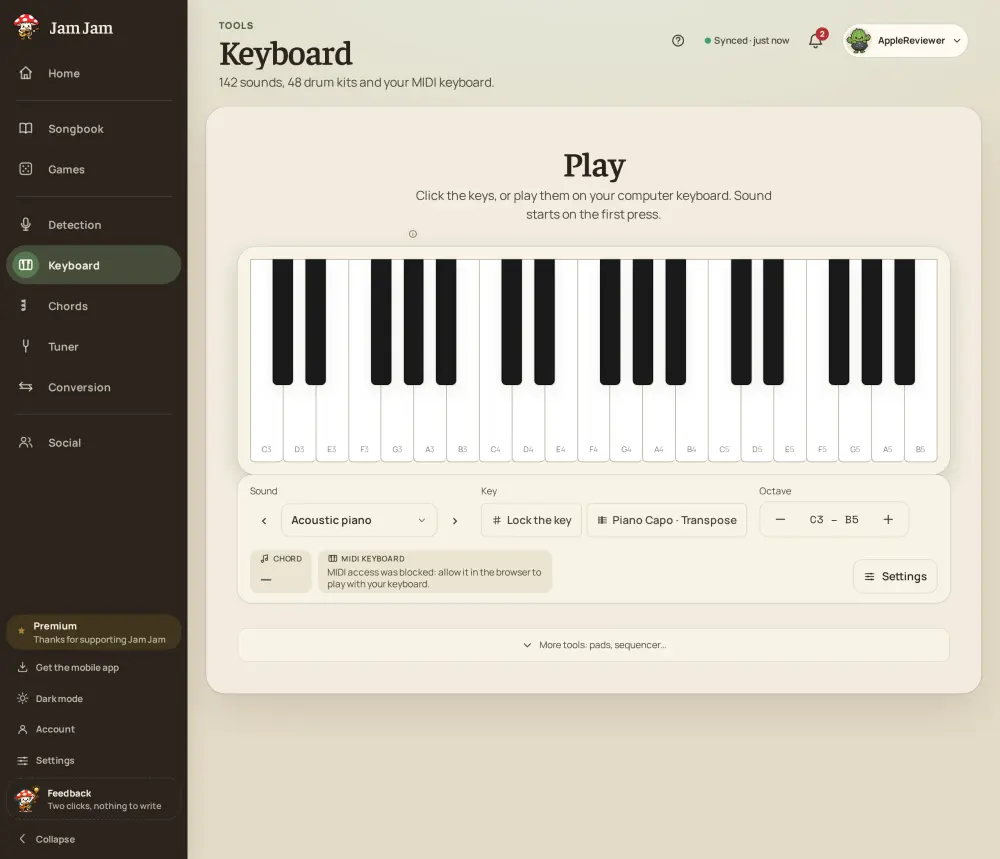
The fastest method: press a tap button on every beat while listening to the song, for at least two bars. The tool averages the time between your taps and converts it: BPM = 60,000 ÷ interval in milliseconds. Jam Jam’s online metronome, built into the web keyboard, and the mobile app’s metronome both have a Tap tempo button with the same calculation (filtered median then mean, so one missed tap is ignored).
| Interval | BPM |
|---|---|
| 1000 ms | 60 |
| 750 ms | 80 |
| 600 ms | 100 |
| 500 ms | 120 |
| 400 ms | 150 |
| 333 ms | 180 |
| Beats in 15 s | BPM |
|---|---|
| 15 | 60 |
| 20 | 80 |
| 25 | 100 |
| 30 | 120 |
| 35 | 140 |
| 40 | 160 |
Counting beats for 15 seconds
With no tool at all, a watch is enough: count the beats for 15 seconds and multiply by 4. 30 beats in 15 seconds give 120 BPM. For more precision, count for 30 seconds and multiply by 2. Watch out with very slow or very fast tempos: it is easy to count twice too many or half too few, following eighth notes instead of quarter notes.
Detecting the tempo of an audio file automatically
Jam Jam’s chord detection on the web analyses an audio file and shows, alongside the chords, the estimated key and tempo; the BPM found can be corrected by hand between 30 and 300. Live mode can also listen to the sound of a browser tab, on browsers that allow it, to follow the chords of a video. Detection can be off by a factor of two: always check by tapping a few beats.
| Marking | Meaning | BPM |
|---|---|---|
| Largo | broad, very slow | 40–60 |
| Adagio | slow, at ease | 66–76 |
| Andante | at a walking pace | 76–108 |
| Moderato | moderate | 108–120 |
| Allegro | cheerful, fast | 120–156 |
| Vivace | lively | 156–176 |
| Presto | very fast | 168–200 |
Orders of magnitude: ranges vary between sources and overlap.
Italian tempo markings and tempos by genre
Classical scores give the tempo as an Italian word rather than a number. The ranges below are usual orders of magnitude: they vary between sources and metronomes. Music genres also have typical zones, with plenty of exceptions.
| Genre | Typical BPM |
|---|---|
| Ballad | 60–80 |
| Reggae | 60–90 |
| Hip-hop | 80–100 |
| Pop | 100–130 |
| Rock | 110–140 |
| House | 118–130 |
| Techno | 125–150 |
| Drum and bass | 160–180 |
Many tracks fall outside these zones: the range only shows where most of them sit.
To find the song’s chords too, read our guide to finding the chords of a song.
Frequently asked questions about song tempo
How do I find out the BPM of a song?
Tap along on a tap tempo button for two bars, or count the beats for 15 seconds and multiply by 4. Automatic detection on the audio file also gives an estimate, to check by ear.
What BPM is a typical pop song?
Most pop songs sit around 100 to 130 BPM, while ballads drop to about 60 to 80 BPM. These are orders of magnitude, not rules.
How many BPM is Allegro?
Allegro usually means about 120 to 156 BPM. Moderato is a little slower (108 to 120), Presto much faster (168 to 200).
Why is the detected BPM sometimes double or half?
Because the pulse can be felt in quarter notes or eighth notes: a song at 70 BPM can be counted at 140. Pick the tempo you would naturally tap your foot to.
Find the tempo with tap tempo, then practise the piece with Jam Jam’s free online metronome.