 Jam Jam
How a piano chord is built
A basic chord is three notes: a root, a third and a fifth. Count semitones up from the root, black keys included. Major: 0, 4, 7 (C E G). Minor: 0, 3, 7 (C E♭ G, or A C E for Am). Diminished: 0, 3, 6 (C E♭ G♭). Augmented: 0, 4, 8 (C E G♯). Suspended: 0, 2, 7 (sus2) or 0, 5, 7 (sus4). Keep the same gaps and the shape moves anywhere on the keyboard.
Piano chord formulas with four notes and more
Dominant seventh (C7): 0, 4, 7, 10. Major seventh (Cmaj7): 0, 4, 7, 11. Minor seventh (Cm7): 0, 3, 7, 10. Minor-major seventh: 0, 3, 7, 11. Half-diminished (Cm7♭5): 0, 3, 6, 10. Diminished seventh: 0, 3, 6, 9. Sixth: 0, 4, 7, 9; minor sixth: 0, 3, 7, 9. Add9: 0, 2, 4, 7. Ninths add +14, the 2 an octave up (C9, Cm9, Cmaj9). These are the 18 formulas of the Jam Jam keyboard, generated on all 12 roots: 216 voicings.
Practise chords on a free online piano
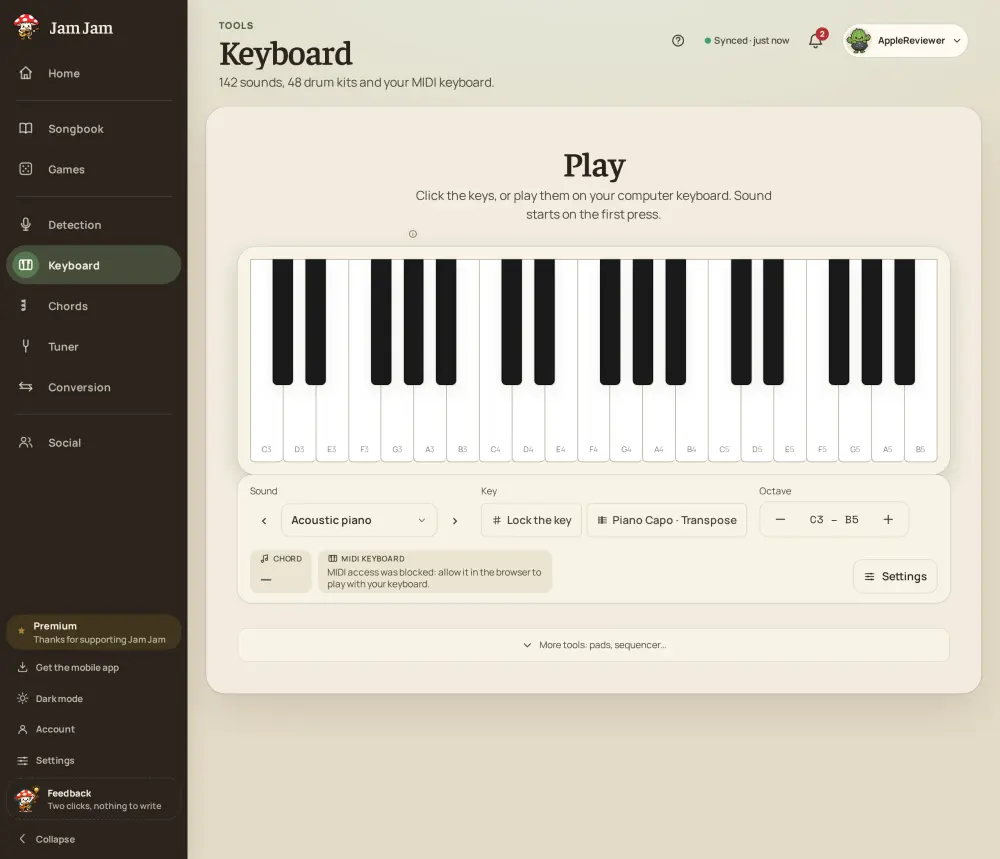
Start with the major and minor triads, then add sevenths. On the Jam Jam online keyboard, chord mode plays a full chord from a single key, and when you hold notes yourself the chord is named live: a way to check a shape without reading music. Free, in your browser, no account.
Piano chords FAQ
How many notes make a piano chord?
Three for a triad (major, minor, diminished, augmented, suspended), four for a seventh or a sixth, five for a ninth. The 18 Jam Jam formulas run from three to five notes.
What is the difference between C7 and Cmaj7?
Both add a seventh to a C major chord. C7 adds B♭ (+10 semitones): the dominant seventh, tense, pulling towards a resolution. Cmaj7 adds B (+11): softer and more floating.
How can I hear a chord before I can play it?
Turn on chord mode on the Jam Jam online keyboard: a single key plays the full chord. You hear the colour of each formula before placing it under your fingers.

Practise piano chords now on the free online keyboard: